13 Best Ancient Egypt Sites to Visit with Kids (Worth Your Family’s Time)

Egypt is one of those bucket‑list destinations for families. It’s filled with iconic temples, towering pyramids, and history.
The challenge isn’t finding ancient sites. It’s choosing sites that will engage your children and deciding which are worth your time.
When you’re planning a family trip to Egypt, you don’t have time to visit every temple, tomb, and pyramid. The right mix of ancient sites can turn history into an unforgettable adventure. Too many, and everyone ends up tired of looking at old rocks.
I haven’t ranked this hand‑picked list of the 13 best ancient Egypt sites to visit with kids by popularity. They all offer something different, something special. Ranking them wouldn’t do them justice.
Instead, I chose these sites because they offer the best combination of wow factor, educational value, and kid engagement.
These are the places where ancient Egypt feels real rather than something trapped inside a history book.
During a 2-week-long road trip through Egypt with my eldest son, we visited ancient sites from Cairo all the way down to Abu Simbel.
From the mighty Pyramids of Giza to the hidden engineering marvel of the Unfinished Obelisk, we found places where history literally became a playground for discovery.
They’re all sites that deserve a spot in your Egypt family trip itinerary.
No time to read?
Save on Pinterest and read this article later!
Top 13 Ancient Egyptian Places to Visit with Kids
From the Pyramids of Giza in the north to Abu Simbel near the Sudanese border, this list covers 13 sites worth building a family trip around.
Each one made the cut for a different reason, some for the scale, some for the story, some simply because kids never get bored there. Honestly, some have it all, and together they cover the full range of what ancient Egypt has to offer.
Sites like Giza, Philae, Abu Simbel, Karnak, Luxor Temple are on the list, but also the must-visit Grand Egyptian Museum and Egyptian Museum where you’ll find lots of artifacts found in the historic sites on the list.
Want to know where all these famous ancient Egyptian places are located? Britannica published an ancient Egypt sites map on their website that shows where to find them.
1. Pyramids of Giza & the Sphinx
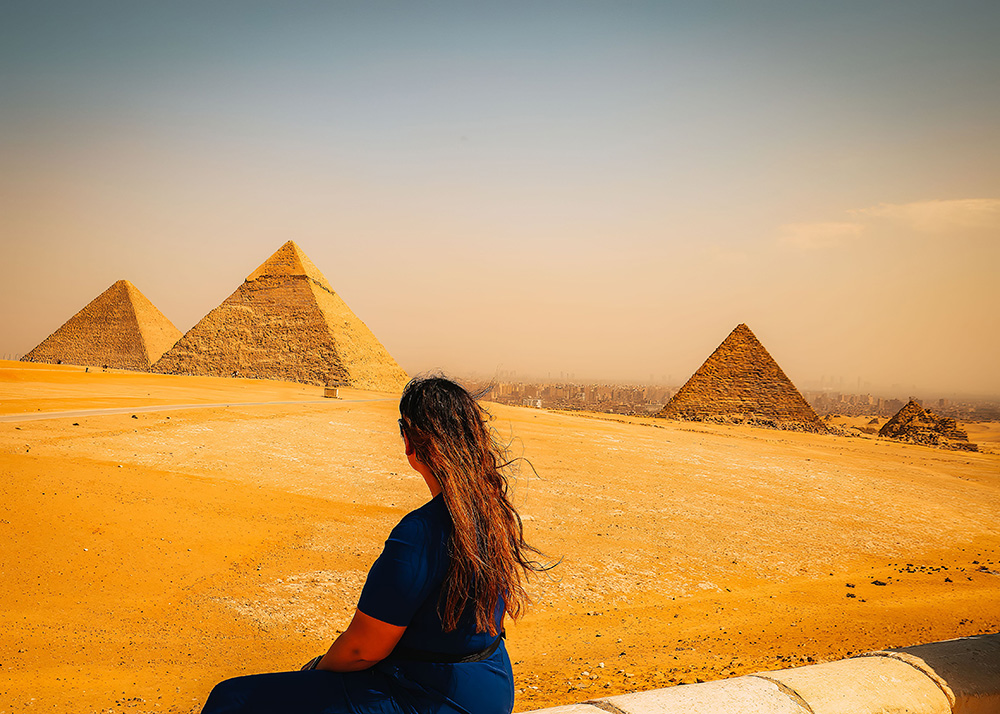
Let’s start with the most famous site in Egypt. Arguably one of the most famous sites in the world. The pyramids of Giza and the Sphinx.
They’re actually neighbors so you can visit them both in one go.
Pyramids of Giza
We start off with the most famous Egyptian site of all, maybe even the world? The pyramids of Giza (sometimes spelled Gizeh). You can find them in Giza, about 6km from Downtown Cairo. No family road trip through Egypt is complete without visiting this architectural gem.
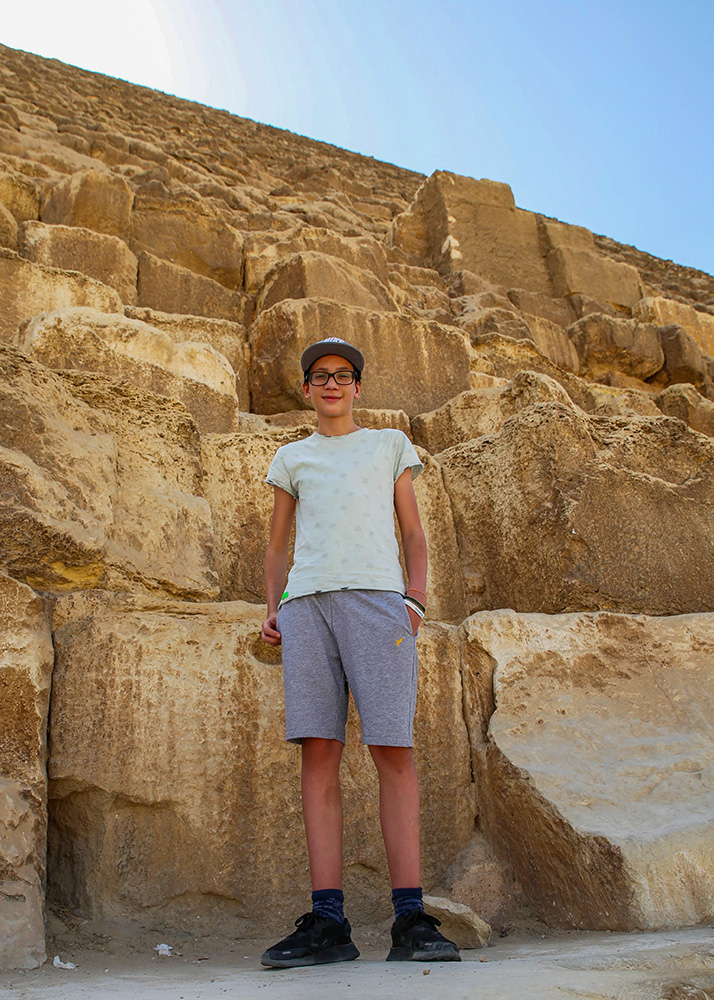
The Great Pyramids of Giza, as this site is officially known, is the only remaining ancient wonder of the world. All the others are gone. It’s part of the UNESCO World Heritage Site Memphis and its Necropolis, running from these pyramids all the way to the pyramids in Dahshur.
The pyramids of Gizeh should be on every traveler’s bucket list, no matter how overrun with tourists it can get. I’ve never heard of anyone who regretted visiting the pyramids.
When you stand in front of them you can’t help but marvel at it. How did they design it and most of all, how did they build it?
You shouldn’t miss a drive up to the viewpoint, where you not only get a great view of the pyramids, but also a glimpse of the massive city that is Cairo.
The Sphinx
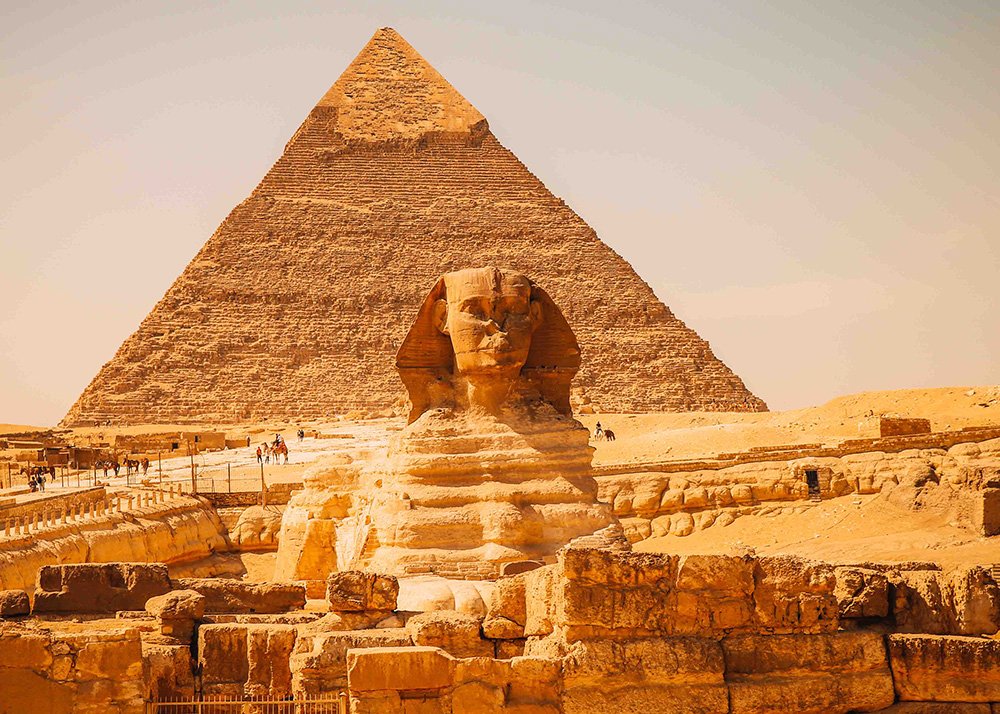
While you’re here you might as well pay a visit to the Sphinx, located on the city side of the entire complex.
The Great Sphinx is a 73-meter-long, 20-meter-high lion with a human head, carved straight out of the limestone bedrock.
Most scholars date it to Pharaoh Khafre’s reign, around 2558 to 2532BC, putting it at roughly 4,500 years old.
You’ll walk past a small souvenir market on the way up to it, plan a few extra minutes if you want to browse.
The real highlight: you can get right up close, all the way to the base, no rope keeping you at a distance like at most ancient sites.
While the pyramids steal the spotlight, the sphinx deserves some love as well.
It’s a quick stop on the same ticket, and standing at the base of something this old, this close, is the kind of moment that they’ll remember.
2. Philae Temple
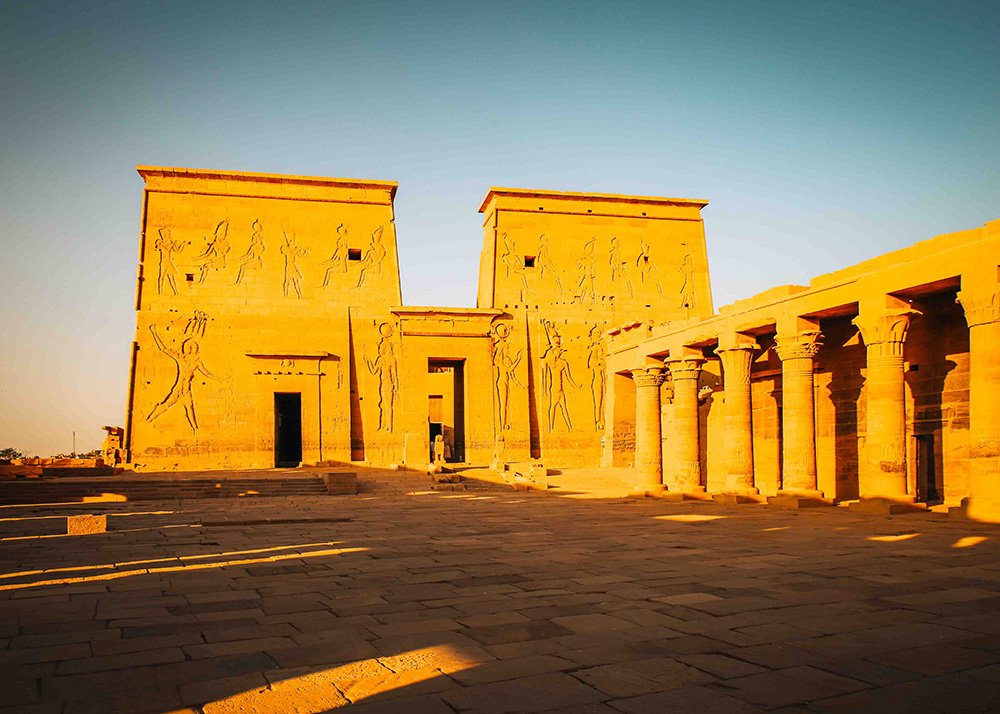
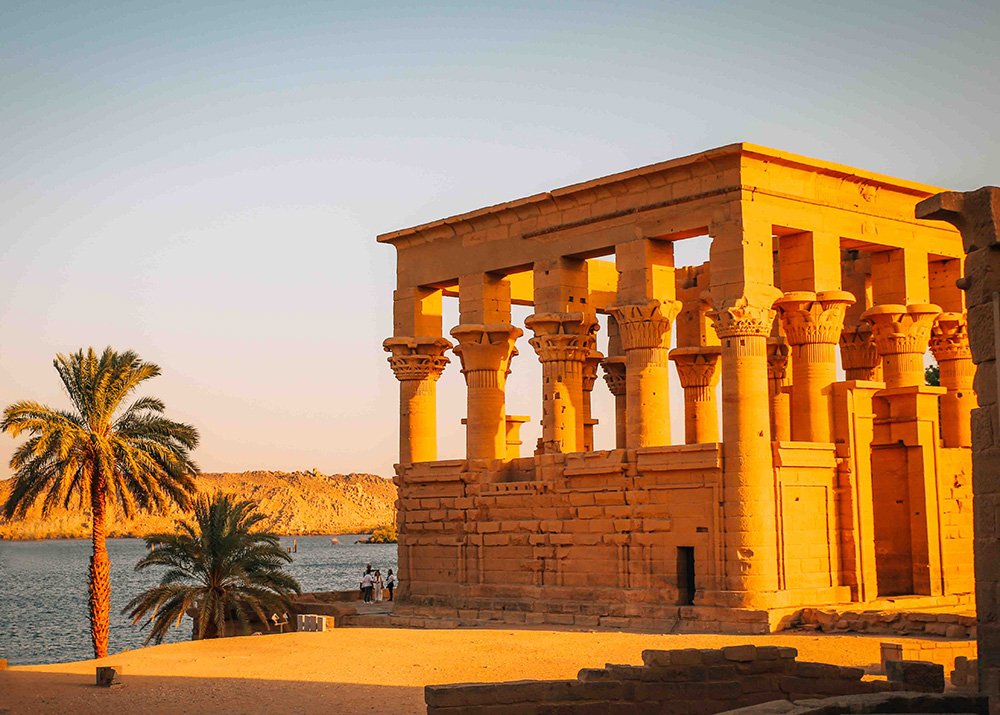
Travelers often overlook Philae Temple, but if you’re in Aswan with kids it shouldn’t be missed. It’s one of the few ancient Egyptian sights that is mostly intact and beautifully preserved.
Take a boat to the island of Agilkia and 15 minutes later you’ll be amazed by this temple complex, the gorgeous details and hieroglyphics and the beautiful surroundings and silence.
The fact that a lot of tourists skip this site is an advantage for your family. You’ll be visiting the place with only a handful of other tourists. A rare thing in Egypt.
Taking a boat and arriving at an ancient temple by water makes it feel like you’re discovering a secret island rather than visiting another historic site.
Kids will enjoy it and you will all enjoy the breeze on a hot day.
Top tip: visit it at the end of the afternoon for the amazing light shining on the buildings.
3. Abu Simbel
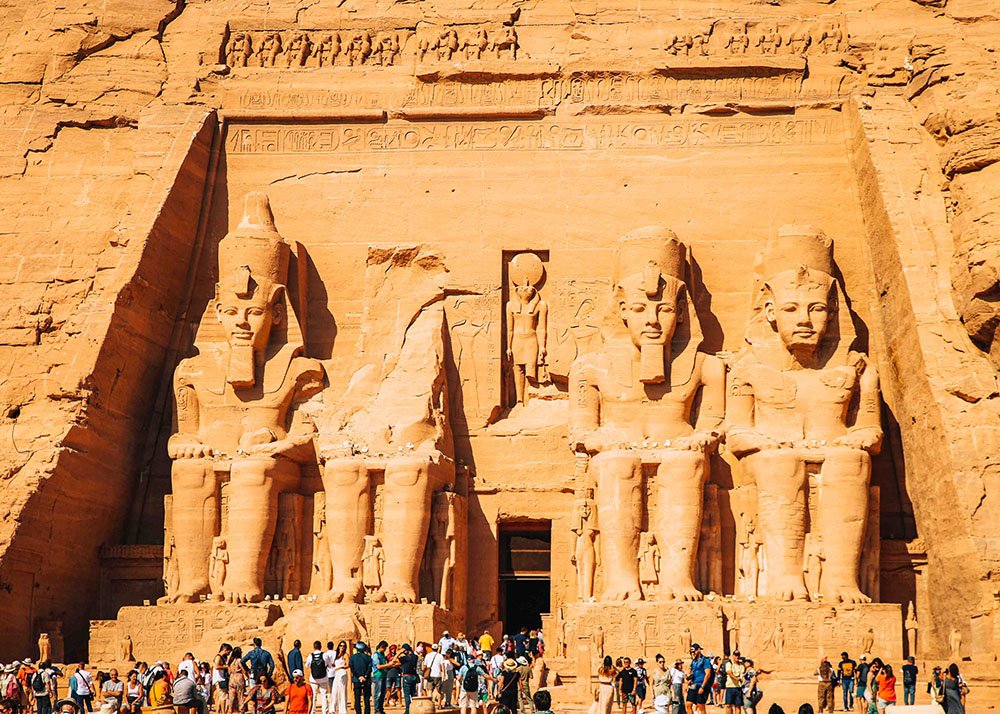
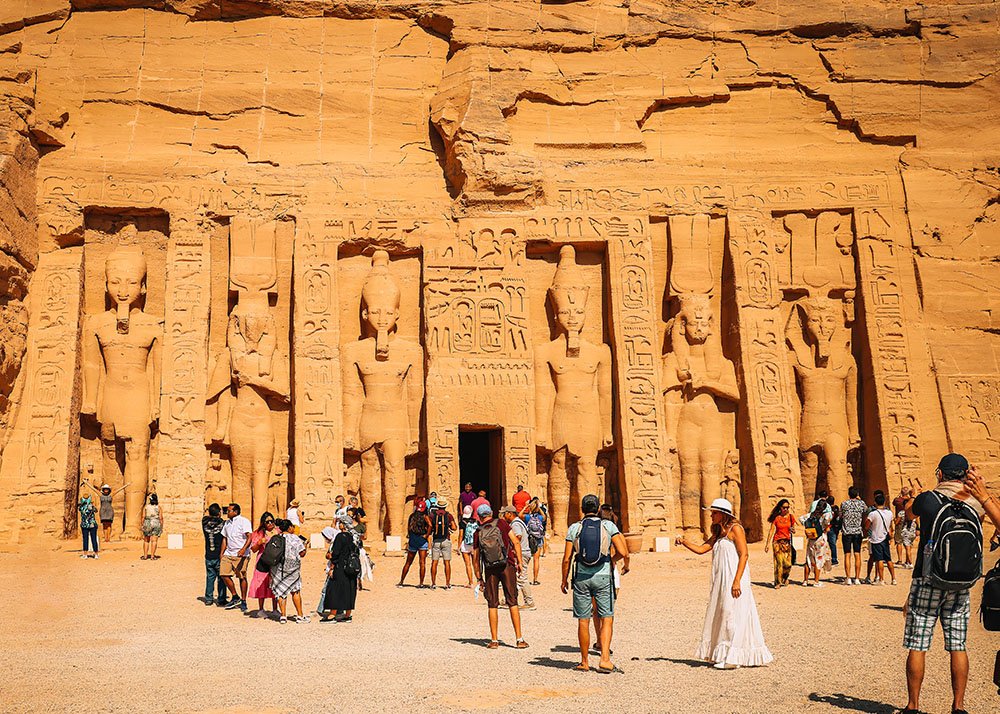
The Abu Simbel temples are 2 of the best preserved temples you’ll find in Egypt. Ramses II gave the order to build the temples.
The Great Temple is for Ramses II and sun gods Amon-Re, Ptah and Re-Horakhte. And The Small Temple for his favorite wife Nefertari and the god Hathor.
The temple of Ramses II is the largest temple built in Ancient Nubia. It’s an impressive sight to see. Both facades are beautiful with a huge amount of details carved into the rocks and the insides of the temples.
You can find hieroglyphics all over Egypt, but the colors are washed away by time. Here you get to see them in all their glory, just like inside the tombs in the Valley of the Kings in Luxor.
Visiting Abu Simbel on a day trip from Aswan is your best option. Planning your Abu Simbel trip can be a challenge, so do your research (like reading the post I just linked for you 😉).
Move of Abu Simbel
There’s another reason why a visit to Abu Simbel with kids is a must.
Engineers originally carved the temples into the mountains, then had to dismantle and reassemble them at their current location in the 1960s.
Building the Aswan High Dam formed Lake Nasser, and the rising water would have submerged Abu Simbel.
Historians consider the relocation one of history’s greatest archaeological engineering challenges. It’s actually a big reason for us to make the trip all the way down to Abu Simbel from Aswan.
What really grabbed my son’s attention wasn’t the temples themselves. It was the fact that engineers cut the entire temple into pieces and moved it.
For kids, that’s often easier to imagine or more interesting to know than events that happened thousands of years ago.
It’s impressive to see the sheer size of the temples and imagine that people moved the 2 temples here and made it look like they were always here.
In the visitor center you can watch a documentary about the move. An interesting watch for both parents and their kids.
Abu Simbel is located all the way in the south of Egypt, about 20km from the border with Sudan. It’s one of the harder sites to get to.
It’s a 3.5h ride from Aswan by car and the Aswan to Abu Simbel road is closed daily from 5.00pm to 5.00am.
Abu Simbel is definitely worth the journey, so if you have the time or if you can make the time, do visit it.

4. Karnak Temple
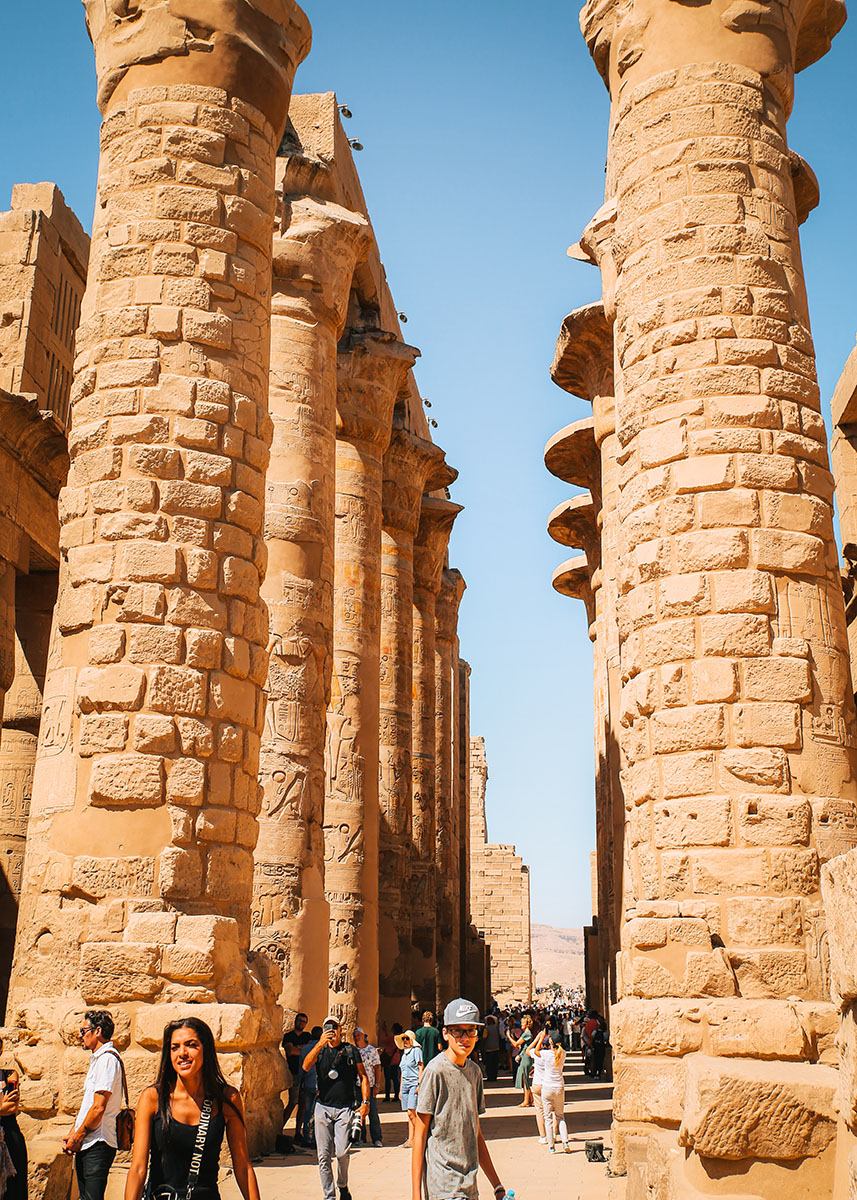
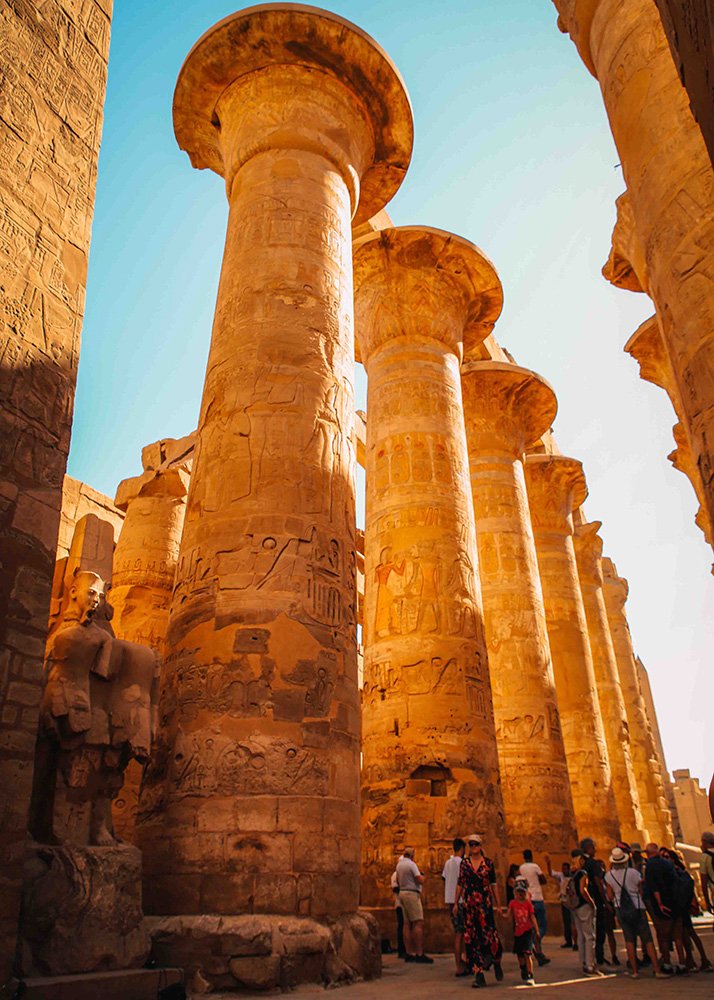
Luxor’s Karnak Temple is the second largest religious site in the world. Only Angkor Wat in Cambodia tops it. It’s beautifully preserved, and a true architectural gem.
You immediately get why Karnak is the most visited site in Egypt, after the pyramids of Giza. If you only have time for one temple complex while in Luxor with kids, let Karnak be it.
There’s lots to see and explore for the whole family. Hieroglyphics tell interesting tales about fights that were won and love that was found. Kids will love the unraveling of the stories all the walls tell. It’s almost like reading a comic book.
There’s also enough room to run around and play hide and seek between the endless rows of pylons, just be mindful of the history and don’t touch or climb on any objects.
In short, this could very well be your family’s number 1 ancient Egypt historical sites. It was ours.
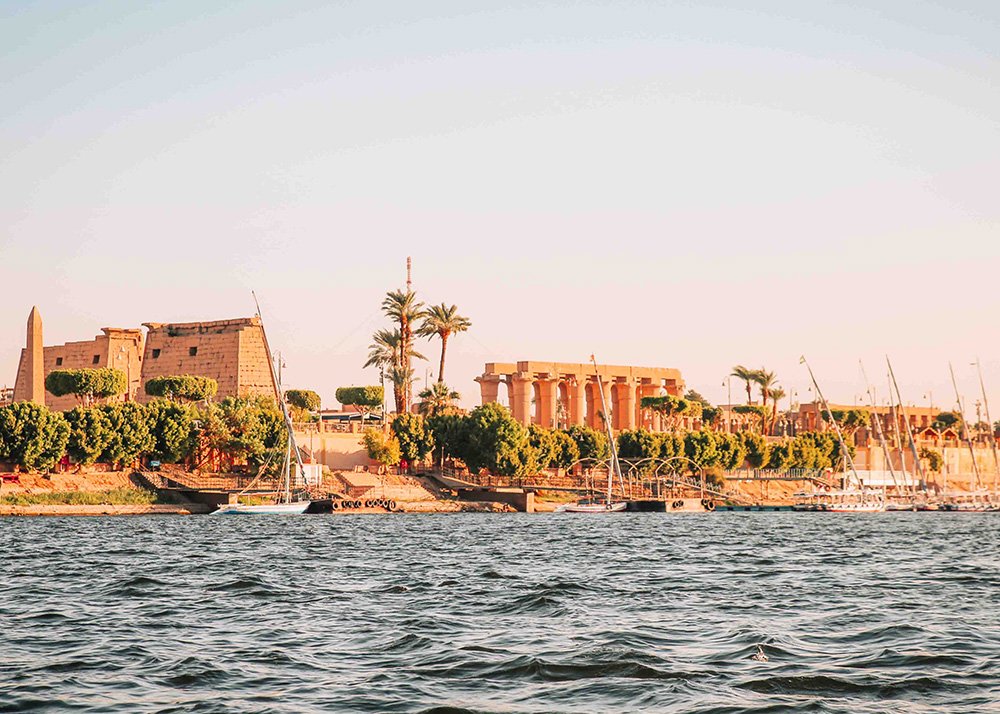
5. Luxor Temple
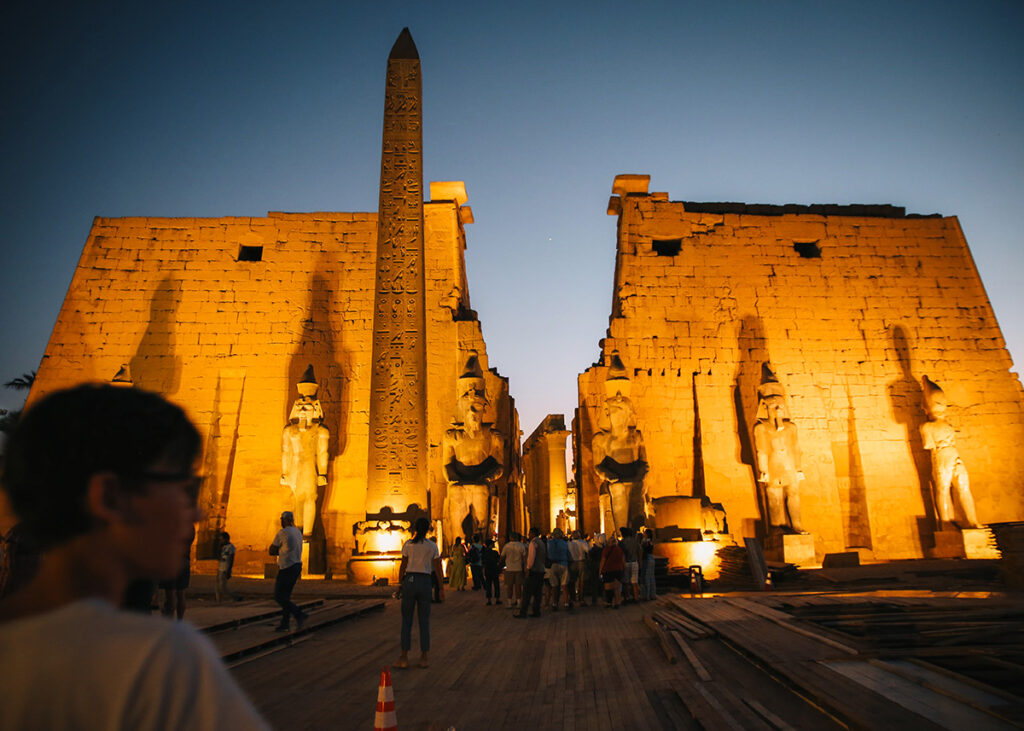

The second sight to see in Luxor is the Luxor Temple. Luxor Temple is much smaller than Karnak, but must not be overlooked. The architecture is amazing and equally mesmerising. If you have the time to visit both, definitely do it.
The Luxor Temple was once the most significant religious center in ancient Egypt. The city was known as Thebes back then.
At the Luxor Temple you can find the famous obelisk. Once a pair, the Egyptians gifted them to France in 1833. One of them moved to Place de la Concorde, but moving the second one proved to be too expensive.
In the 1980s France retracted the claim to the second one. Gladly so, because the obelisk deserves to be admired at its original location.
The Avenue of the Sphinxes connects Luxor Temple to Karnak Temple. You can walk from one temple complex to the other while 650 sphinxes watch over you. That’s already an impressive number, but there used to be 1.350 of them.
I wouldn’t recommend walking the entire route, because it’s 2.7km long. In the heat that is undoable, because there’s barely any shade. The best thing to do is visit Luxor Temple and enjoy a part of this walk from there.
Top tip: visit the Luxor Temple at night, when the entire site is beautifully lit. Visiting after dark completely changed the experience. The floodlights create huge shadows across the columns and statues, making it feel almost like walking through a movie set.
6. Valley of the Kings
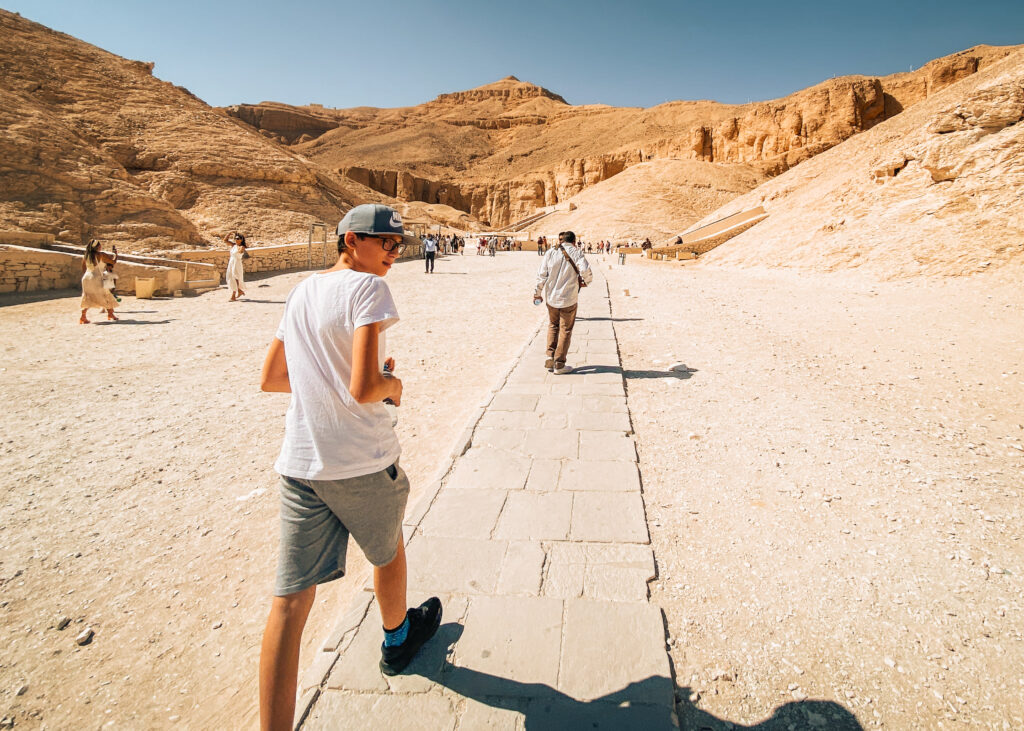
If you want to feel like Lara Croft or Indiana Jones, a visit to Valley of the Kings is a must. You can find this immense sight on the West Bank of Luxor.
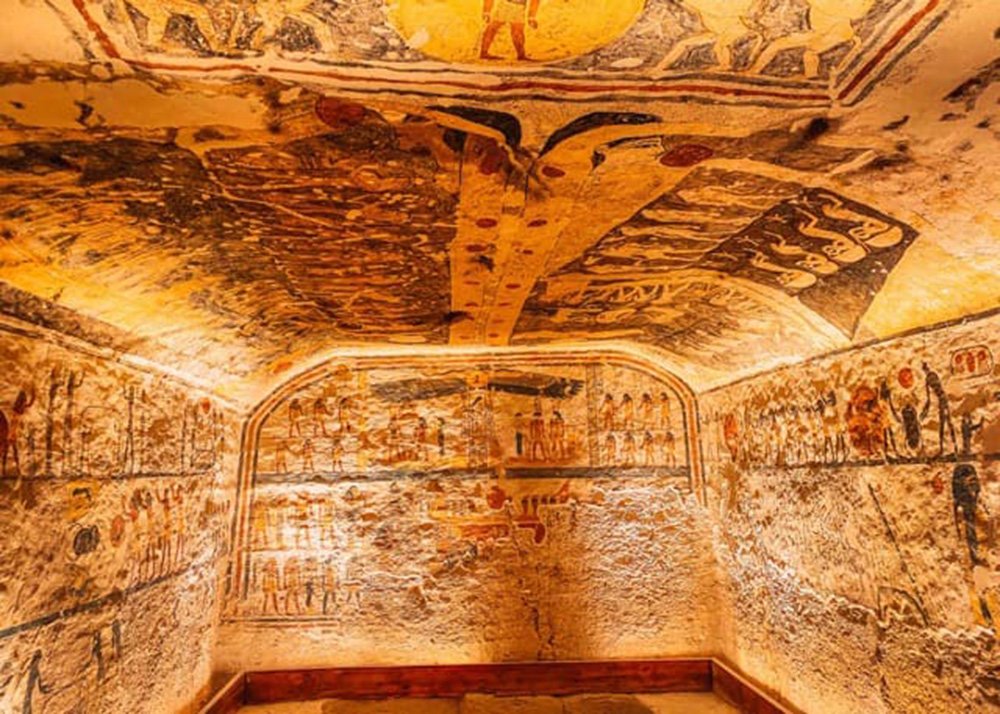
Here you can go underground and visit a couple of the 23 tombs that are open to visitors. The other 40+ are not. The tombs are all beautifully adorned and in some of the tombs the colors are still vivid.
You can enter 3 tombs with your ticket, excluding Tut’s tomb (more on that later).
The ones that we loved and recommend are the tombs of Ramesses (or Ramses) IV, Ramesses IX and Mernaptah. The last one had the best decorations and the colors were greatly preserved.
Tomb of Tutankhamun
Tutankhamun’s tomb is the most famous one in the Valley of the Kings, but not because it’s the most impressive to look at. When excavators discovered it, all of his treasures were still inside.
It’s because of this that King Tut is now one of the best known pharaohs in history, even though he only ruled for a few years and died young.
You have to pay extra to visit Tut’s tomb. And since we heard that the tomb itself is small and plain compared to others nearby, we skipped the inside and stuck to a look from the outside.
If your kids only know one pharaoh’s name, it’s probably his. If you have trouble getting them into the tombs, but this one has their interest, it might be worth your time and money.
Valley of the Queens
The Valley of the Queens sits near the Valley of the Kings. If you’re looking to explore tombs without the crowds, visit some of the 91 tombs in the main valley.
Note that the tombs are generally smaller than the tombs in the Valley of the Kings.
While we meant to visit, the heat had become almost unbearable, so we decided to head to the hotel after our visit to the Valley of the Kings.
If you have more days here, you could visit both, each in the early morning.
7. Temple of Seti I
You’ll find the Temple of Seti the First in Abydos.
Abydos doesn’t sit on the usual Cairo to Aswan route, which is exactly why most travelers skip it, including us.
We simply ran out of days to make the detour south to Abydos. It’s high on our list for next time, and here’s why.
The Temple of Seti I is one of the best preserved temples in Egypt, Seti I started it, and his son Ramses II finished it.
Inside you’ll find the Abydos King List, a wall carved with the names of 76 pharaohs going all the way back to the first dynasty.
Seti left a few names off on purpose, including Hatshepsut and Tutankhamun, which tells you as much about ancient Egyptian politics as any history book.
The carvings here are some of the finest you’ll find anywhere in Egypt, still sharp after thousands of years. That’s why we were bummed we couldn’t make a visit work.
But hey, Egypt is worth revisiting over and over, so we’ll definitely visit it and share more info with you after.
8. Kom Ombo
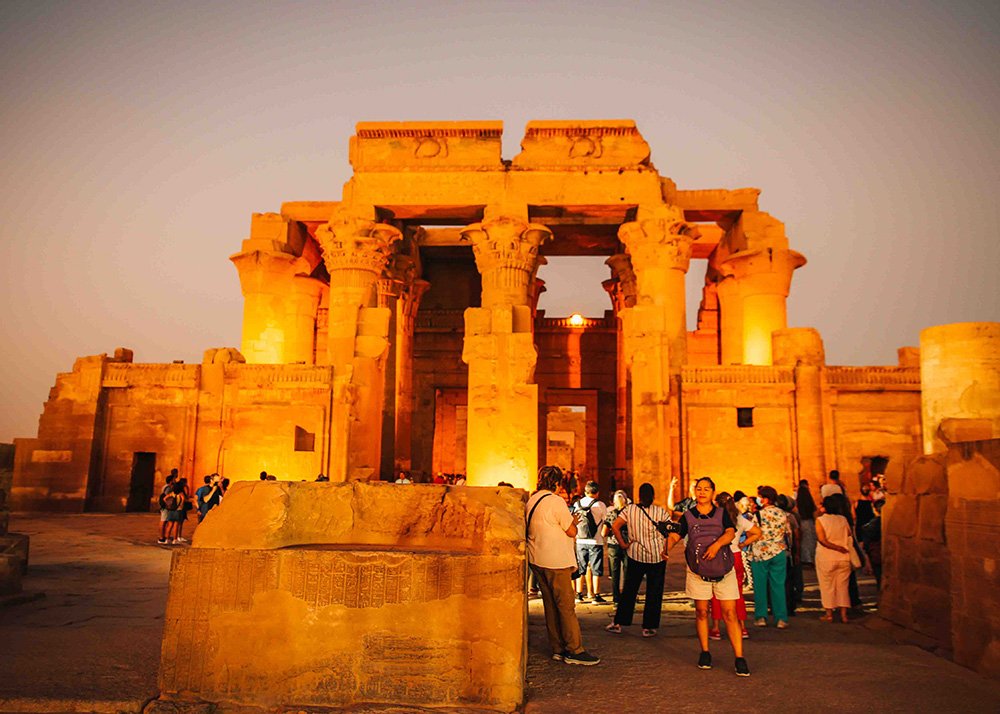
Kom Ombo is a little off the beaten path and best accessible with a car from Luxor or Aswan or while on a Nile river cruise.
The Kom Ombo temple sits on the bank of the Nile, and that makes for a lovely view.
Little remains of this temple for the gods Sobek and Horus, but it’s still worth a visit. Here you can find hieroglyphics of surgical tools like scalpels, suction cups, dental tools and bone saws. Amazing to see that they used tools ages ago that we still use today.
The other great thing about this temple is that you can check out the calendar that the Egyptians used back in the day. The calendar divides the year into 3 seasons: flood, sowing and harvest.
Each season has 4 months and each month 3 weeks of 10 days. The 30 weeks for 12 months counts up to 360 days. Egyptians called the 5 missing days the forgotten dates that correspond with the birthdays of the gods Horus, Isis, Osiris, Seth and Nephthys.
My son thought that was fascinating and wouldn’t stop taking pictures of it.
In short, you don’t go to Kom Ombo for the beautifully preserved temples and columns, but rather for a lesson in history. It’s amazing to learn how advanced the Egyptians were and how many things invented by them are still being used today.
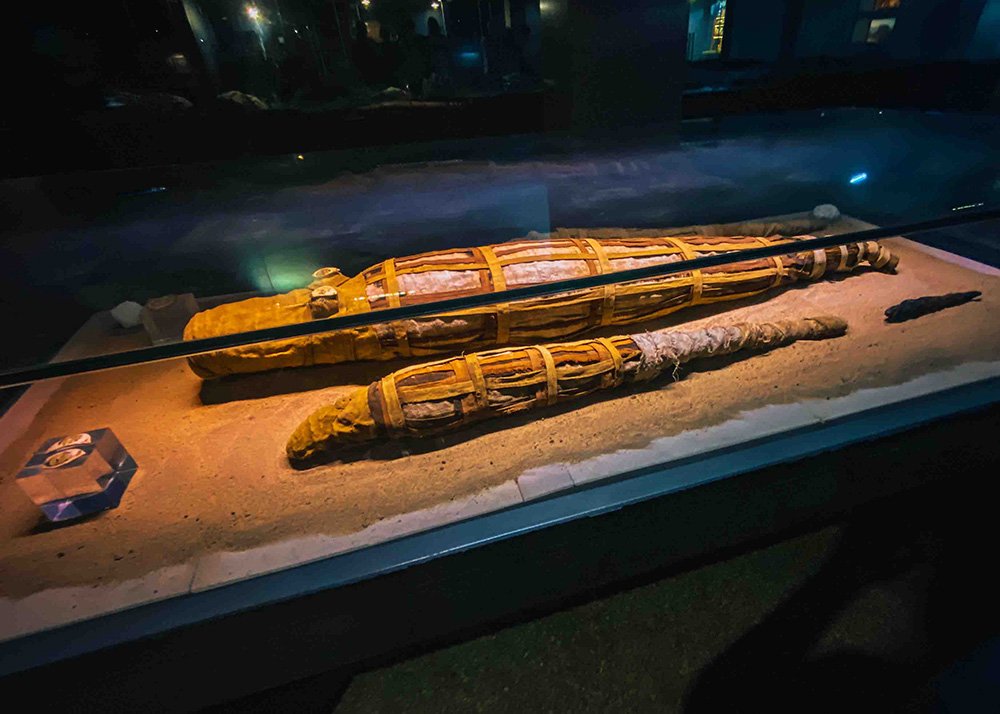
Top tip: right next to the temple you’ll find the Crocodile Museum. A small place that takes about 20 minutes to explore and is filled with mummified crocs in all stages of life. Babies as well as huge grown ones. Your kids will love a visit to this place.
9. Temple of Horus
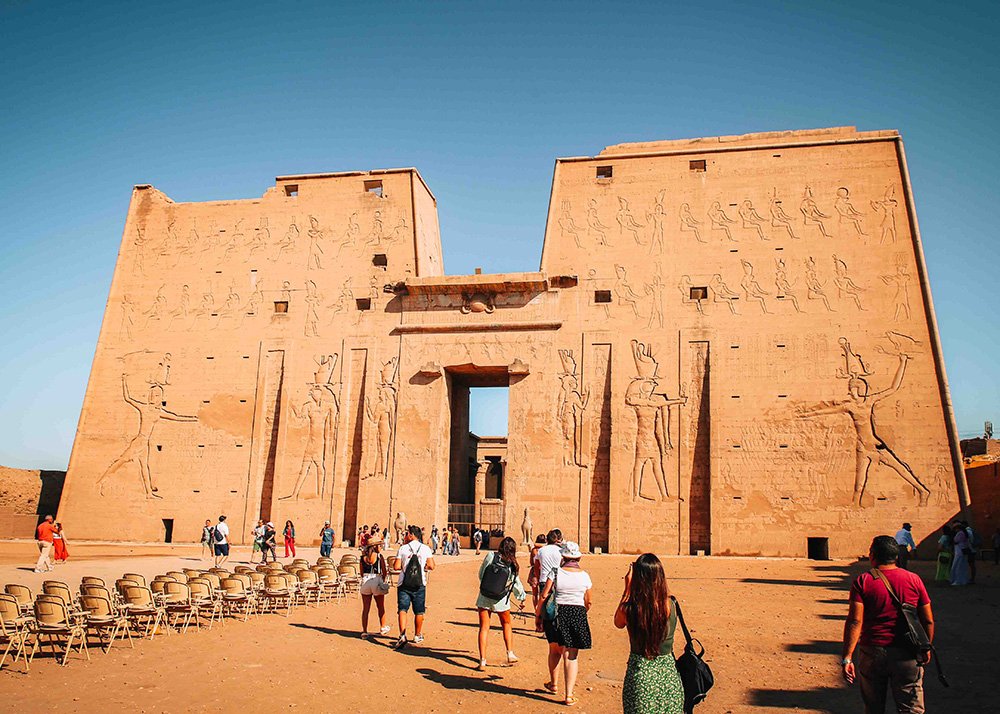
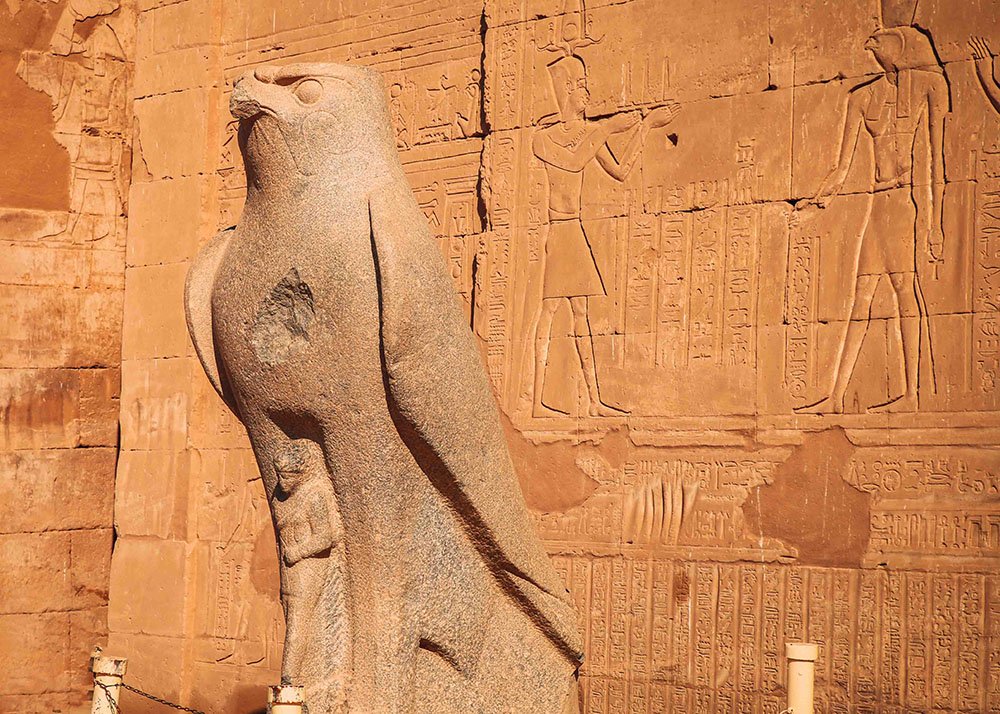
You’ll find the Temple of Horus in Edfu, which is why it is otherwise known as Edfu Temple.
Sand and silt buried the temple of Horus for centuries, until excavators discovered it in 1860.
Because of this it’s one of the best preserved archeological sites in Egypt. Here you truly feel like you’ve gone back in time.
We actually stayed way longer than we thought before we got here. We felt like Indiana Jones, discovering a new site. Ok ok, together with hundreds of others, but still 😉.
Especially impressive is a wall that tells the story of the fight between Horus and Seth in hieroglyphics and detailed carvings.
Avoid horse carriage ride to the temple
Most people opt to get a horse carriage ride to the temple complex. The carriage drivers have monopolized the route from the Nile to the temple, and it’s still very much a monopoly. Many of the horses are tired, underfed or limping, and drivers can pressure you for extra tips. Another sad example of animal abuse in tourism.
Don’t expect to simply hop in a tuk-tuk or taxi at the docks instead, the carriage drivers actively block that option right there.
Your best shot is arranging a taxi or tuk-tuk in advance through your guide or cruise company, ideally one that picks you up a little further from the dock. It takes some planning ahead, but it’s worth it to skip the horses altogether.

10. Temple of Hatshepsut
While most people have heard about Cleopatra, there was another female who reigned successfully in Egypt. Queen Hatshepsut.
She once was the chief wife of pharaoh Tutmose II, but he died pretty soon. His successor was only a baby, so Egypt named Hatshepsut queen regent to her little nephew.
She made all the decisions and ruled ancient Egypt, but she wanted to be a pharaoh. That started by dressing like one, wearing male clothes and the standard fake beards they all wear.
Out of all the pharaoh stories we heard in Egypt, this was probably the easiest one for kids to remember. A queen who dressed like a king and wore a fake beard to rule Egypt is exactly the kind of detail that sticks in a child’s mind. Even my teen was impressed 😉.
She was extremely successful and now known as one of the best pharaohs. Known for her peace deals and amazing trades, she built many monuments with the money she made.
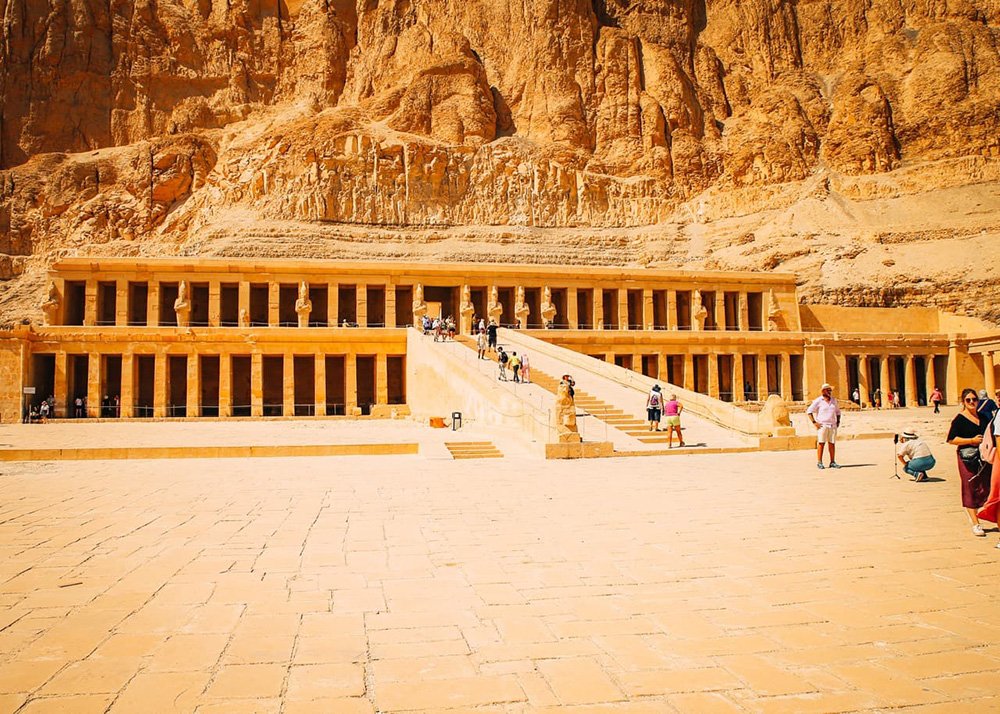
One being her own mortuary temple on the West Bank of Luxor.
When you stand in front of it you get why it’s referred to as the greatest ancient Egyptian achievements.
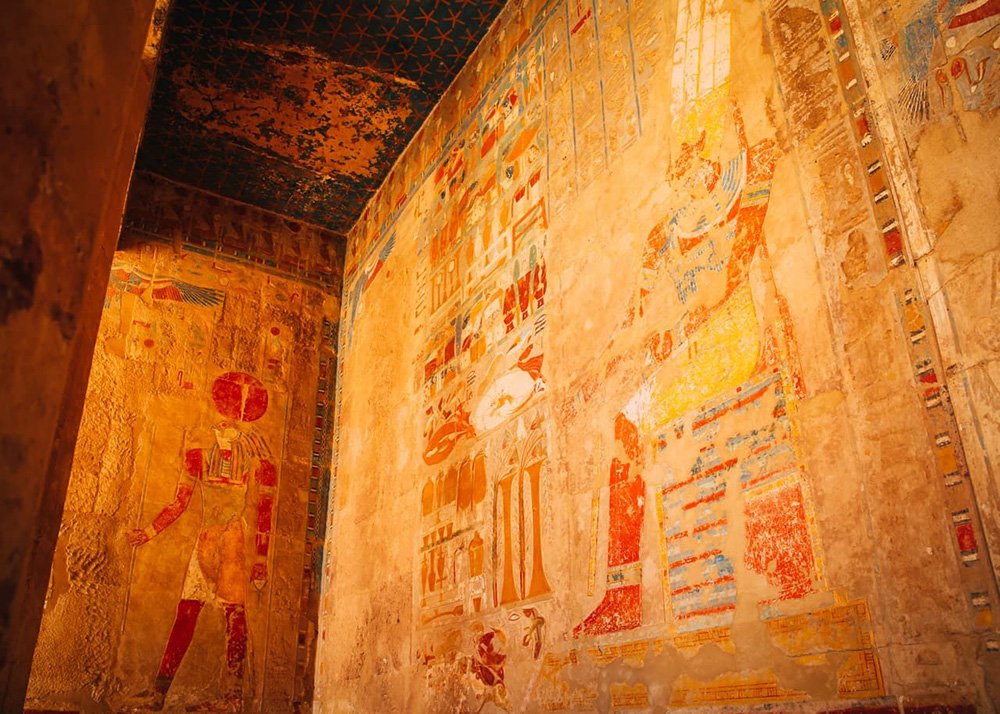
There are 3 amazing levels to explore here. A true architectural gem that tells the story of Hatshepsut in detail. We loved how the colors of the mural paintings are still so vivid.
The temple of Hatshepsut sits within a complex of mortuary temples and tombs, known as Deir el-Bahari (aka Deir al-Bahri).
11. Djoser Pyramid
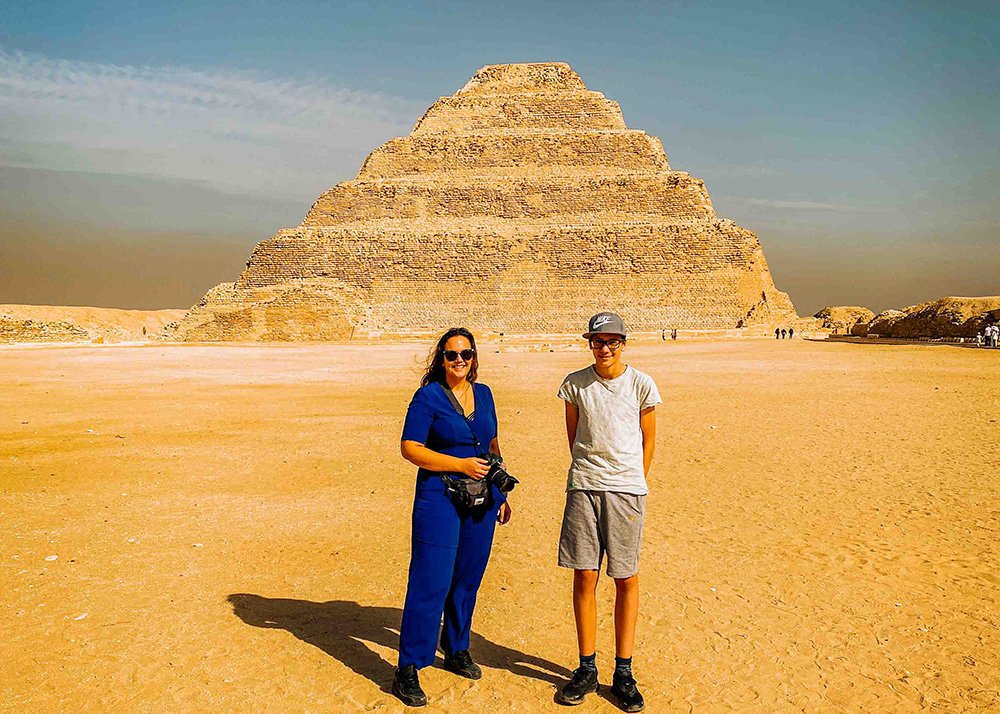
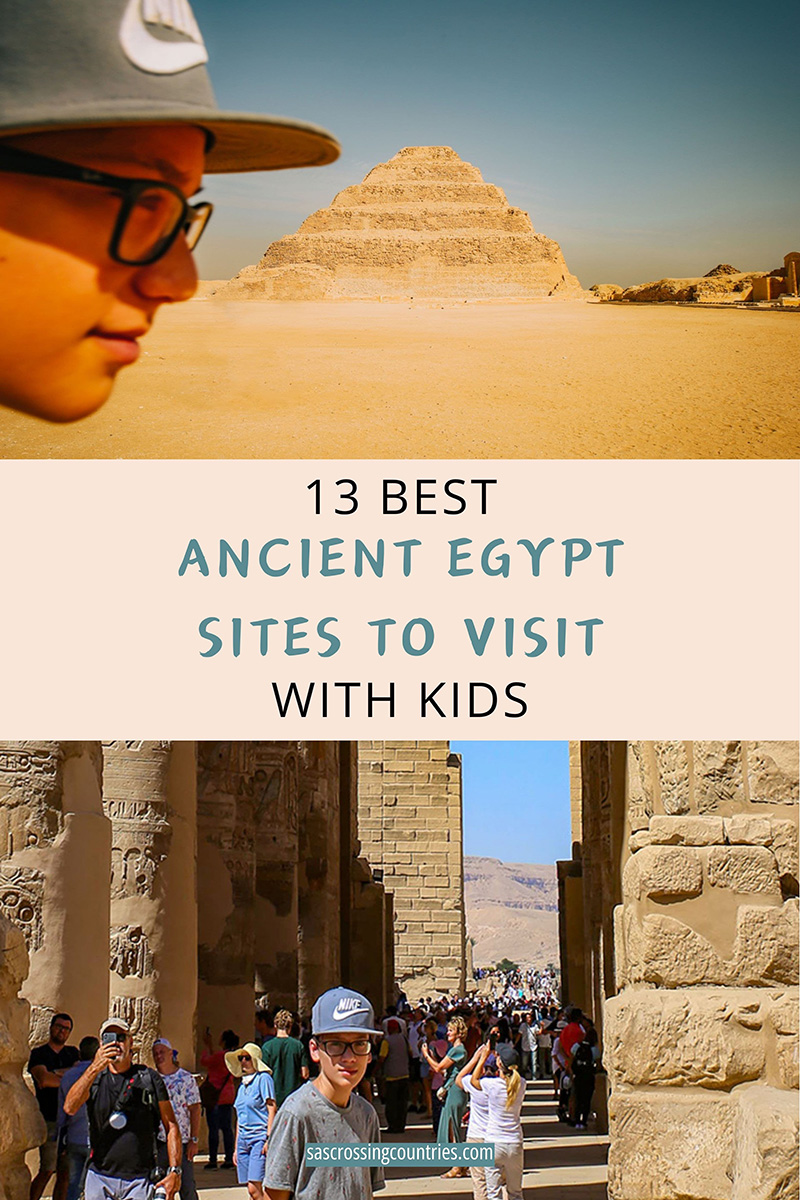
We started with the world famous pyramids of Giza and now we end with the first pyramid: the Step Pyramid of Djoser, found in a place called Saqqara, a 1 hour drive from Cairo.
This pyramid is known as the Step Pyramid, and you immediately see why.
It sits in the Necropolis of Saqqara and it’s not only the first pyramid that Egyptians built, it is also the oldest ancient Egyptian stone structure that we know of.
This pyramid is extremely important as far as Egyptian history is concerned.
Your family will be staring at a structure that is about 4,700 years old. How often can you say that?
12. Grand Egyptian Museum
The 11 sites above are where ancient Egypt actually happened.
The last 2 stops on this list aren’t ancient at all, they’re museums built to house everything excavators found at those sites. If you want to understand what you just saw, this is where it all clicks into place.
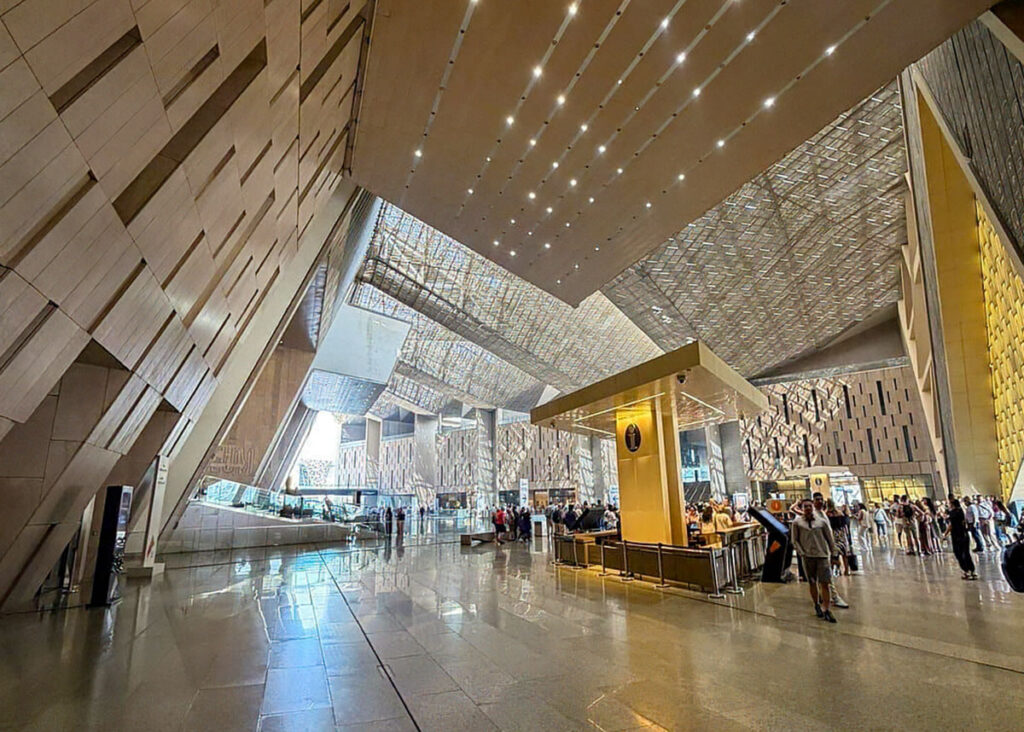
Let’s start with the Grand Egyptian Museum, or GEM, opened to the public in November 2025, right next to the Pyramids of Giza.
It’s the largest archaeological museum in the world built around a single civilization, and it’s where most of Tutankhamun’s treasures now live, displayed together for the first time ever.
If your kids have been hearing about Tutankhamun all trip, this is where the story finally pays off.
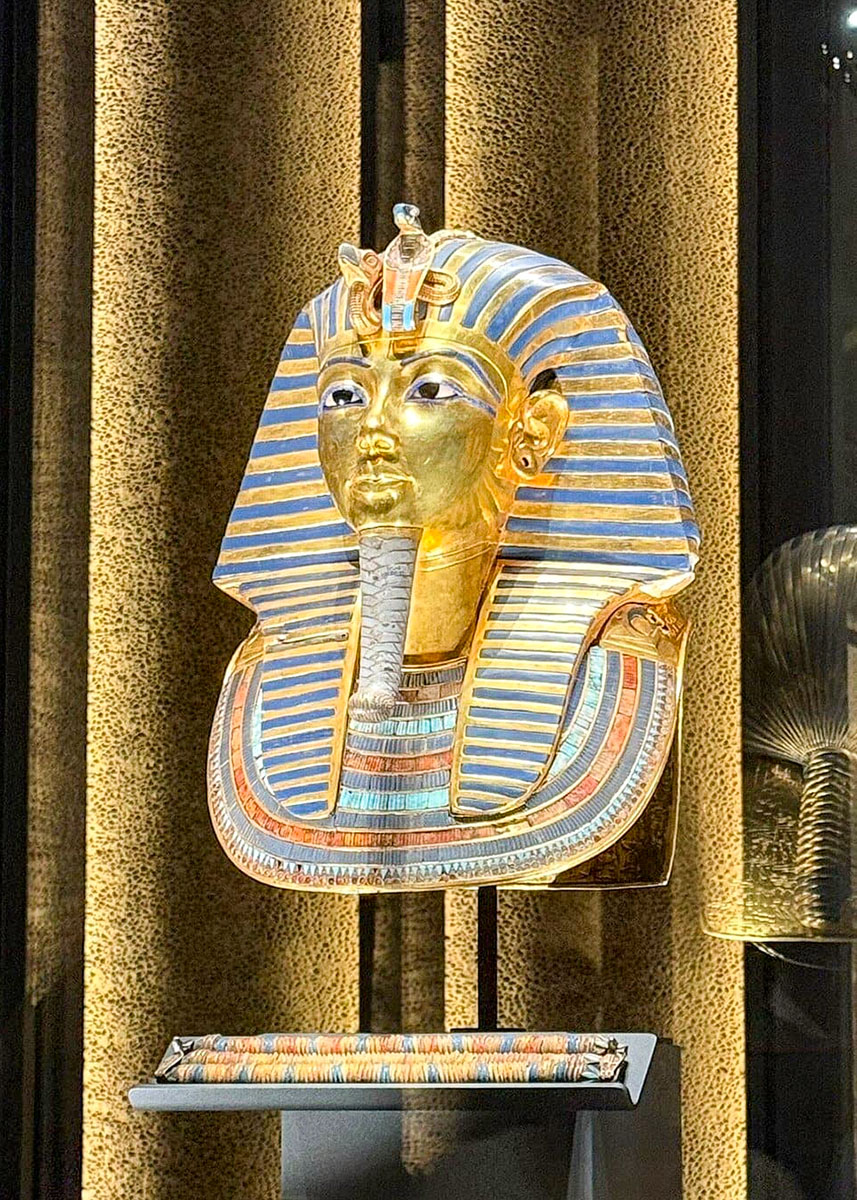
The golden mask, the coffins, the chariots, the 5,000+ objects that came out of that small tomb in the Valley of the Kings, it’s all here.
You must book tickets online in advance for timed entry. You can’t just show up and buy tickets at the door.
Plan for at least half a day, the museum is enormous and there’s a lot to see. Visiting GEM is one of the best things to do in Cairo with kids.

13. Egyptian Museum in Cairo (EMC)
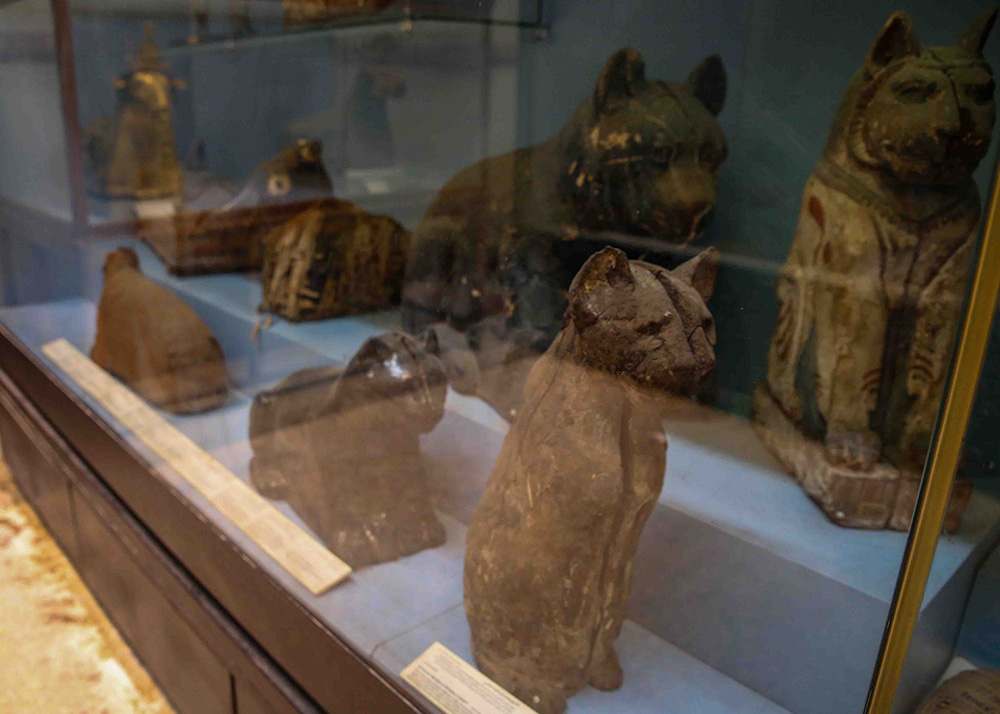
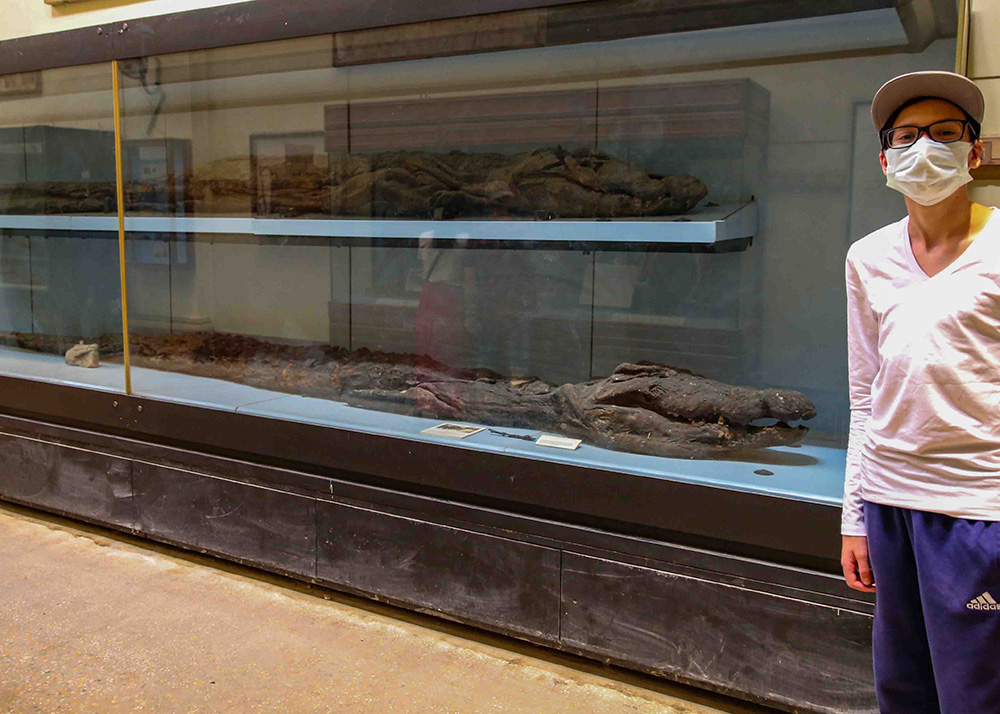
For decades, the Egyptian Museum in Cairo was the place to see Tutankhamun’s treasures. That’s no longer true.
The Tutankhamun collection moved to the Grand Egyptian Museum in 2025, and the royal mummies moved to a different museum entirely, the National Museum of Egyptian Civilization. If you came here expecting the golden mask, you’ll be disappointed.
So why bother? Because this museum, open since 1902, still holds an enormous amount of what made ancient Egypt ancient Egypt.
Middle Kingdom, Late Period, and Greco-Roman artifacts are still here.
It’s less polished and more old-school than the new museum, packed room after room with sarcophagi, statues and everyday objects, the kind of place where you stumble onto something incredible without a spotlight pointed at it.
If you only have time for 1 museum in Cairo, make it GEM. But if you have a free morning and want to see ancient Egypt the way it’s been displayed for over a century, this one still earns its spot.
History of Egypt
Known as the oldest nation on Earth, Egypt left a lasting mark on not just Northern Africa, but also well beyond that. Egypt dates back to the 4th millennium BC. Let’s get into the ancient history of Egypt.
Ancient Egypt had 2 main regions that still exist today. Upper Egypt and Lower Egypt. Each used to have their own pharaoh. Pharaoh Narmer united Upper and Lower Egypt in 3100BC. Making Narmer the first king of Egypt and the founder of the First Dynasty.
The First Dynasty is also the era when the first pyramids were built. They didn’t build them like in Giza, though. That was centuries later. The step pyramid of Djoser is the first pyramid ever built.
Egypt had several capitals throughout its history. The most famous being Memphis (the first official capital), Thebes (now Luxor) and Alexandria (named after Greek/Macedonian king Alexander the Great).
Other key cities in Egyptian history were Nubt (now Kom Ombo), Elephantine (near Aswan) and Crocodilopolis (now Faiyum).
The peak of power, wealth and influence during the New Kingdom period (1550 – 1070 B.C.) saw the reigns of famous pharaoh’s like Tutankhamun, Ramses II and Thutmose III.
But around 1155 B.C. the decline of the Egyptian Empire started slowly setting in with the murder of Ramses III, known as the last great pharaoh. A period of drought, economic crises and invasions caused the decline.
A string of pharaoh’s also named Ramses followed, but they went into history without any significant triumphs or fixing problems ancient Egypt was facing. Ramses XI died around 1070 B.C. and was the last pharaoh of the New Kingdom.
Greek and Roman Rule
Some of the beautiful places to visit in Egypt have a Greek and Roman feel to it. And that’s not a coincidence. The Greeks formed their own dynasty in Egypt from 300 to 30BC, called the Ptolemaic Dynasty. In 30BC the Romans took over and they ruled until around 640AD.
The Greek and later the Romans, added their own spin to the already mesmerizing Egyptian architecture and even built entire complexes in ancient Egypt. Some examples of Greco-Roman temples are Philae, Kom Ombo and Edfu.
FAQ
Don’t have time to read this post now? Don’t worry, check out this faq to get answers to the most common questions about the best ancient sights in Egypt.
What is the most beautiful place in ancient Egypt?
Impossible to answer, but I’ll give you an answer based on what people often consider to be the most beautiful place in ancient Egypt: the Temple of Karnak in Luxor.
It’s not just a single temple but a sprawling complex of sanctuaries, kiosks, pylons, and obelisks, all dedicated to the Theban gods and the glory of the Pharaohs.
What are the places worth seeing in Egypt other than the Sphinx and the Pyramids?
Beyond the iconic Sphinx and Pyramids of Giza, Egypt packs in historical treasures that are perfect for a family adventure.
Abu Simbel is a breathtaking temple complex in southern Egypt, carved directly out of the mountainside, with colossal statues of Ramses II that are sure to capture the imagination of kids.
Another gem is the Valley of the Kings, where you can explore the tombs of ancient Pharaohs, including the famous tomb of Tutankhamun. The colorful, well-preserved wall paintings here bring ancient myths and legends to life, making history feel exciting and real.
If you want to see what came out of all these sites, don’t skip the Grand Egyptian Museum near Giza, it houses the complete Tutankhamun collection and thousands of other artifacts.
And the temple complexes Karnak, Luxor, Edfu, Kom Ombo and Abu Simbel are fascinating places to visit in Egypt with family.
What are some of the best ancient sites in Egypt?
Some of the best ancient sites in Egypt include the Karnak and Luxor Temples, the Temple of Hatshepsut and the Valley of the Kings, all located in Luxor.
The great pyramids of Giza and the step pyramid of Djoser can’t be left off your list of things to do in Egypt with kids. And sites like Philae, Kom Ombo, Edfu and Abu Simbel are all worthy of a visit as well.
What are some good places to visit in Egypt with lots of history?
For history buffs, the Philae Temple, dedicated to the goddess Isis, in Aswan is particularly enchanting, especially when you arrive by boat as the ancient Egyptians did.
Another must-visit is the Step Pyramid of Djoser in Saqqara, which predates the Great Pyramids and offers fascinating insights into early pyramid construction.
The Temple of Edfu and Abu Simbel are 2 of the best preserved sites in Egypt and really give you the feeling you’ve stepped back in time.
What are some of the least known archaeological sites in Egypt?
If you’re looking for hidden gems, Abydos and Dendera are lesser-known sites worth a visit. Abydos, one of the oldest cities in Egypt, is home to the Temple of Seti I, which features some of the most intricate carvings and vibrant colors you’ll find anywhere in Egypt. Dendera is famous for its Temple of Hathor, where the ceilings are adorned with beautiful astronomical scenes.
Is the Grand Egyptian Museum open in 2026?
Yes. GEM fully opened to the public on November 1st 2025.
Ready to Plan Your Egypt Road Trip?
The temples, tombs, museums and pyramids on this list are more than just historic landmarks.
They’re time machines that turn your Egypt family trip into a story your kids will never stop talking about.
Whether you’re planning a week or a month, make room in your itinerary for these iconic sites.
Want to know how to fit them all in? My Egypt with kids itinerary will help you create your ultimate road trip. Because visiting famous landmarks in Egypt is great, but there are more things to do in Egypt.
Hop aboard a Nile River Cruise, snorkel or dive in the Red Sea, and explore cities like Cairo, Luxor, and Sharm El Sheikh.
Did you enjoy best ancient Egyptian places to visit with kids?
If so, read more about family travel in Egypt:
- 3-Week Egypt Itinerary for an Epic Egypt Family Road Trip
- Nile Cruise with Kids
- 10 Things to Do In Cairo with Kids
- 13 Things to Do In Aswan with Kids
- Planning a Family Trip to Aswan: Things to Know Before You Go
- 10 Things to Do In Luxor with Kids
- 13 Best Ancient Egypt Sites to Visit with Kids
- How to Plan a Day Trip to Abu Simbel from Aswan with Family
- Planning a Family Trip to Abu Simbel: Things to Know Before You Go
Pin for Later